Absorbable Suture Timeline: When Does Each Type Dissolve?
Different absorbable sutures lose strength and mass at very different rates — from 10 days for rapid-absorbing gut to 180+ days for PDS. This article provides a clear, comparative timeline to help clinicians choose the right material for each tissue.
Why Does Absorption Timeline Matter?
Absorbable sutures are designed to be broken down and eliminated by the body, but the rate at which this happens varies enormously between materials. Choosing a suture that absorbs too quickly can lead to wound dehiscence; one that lingers too long can provoke chronic inflammation or palpable suture knots. Understanding the absorption timeline of each material is essential for optimal wound outcomes.
Comparative Absorption Timeline
- Plain gut — 50% strength at 7–10 days; complete absorption by 70 days.
- Chromic gut — 50% strength at 14–21 days; complete absorption by 90 days.
- Rapid polyglactin 910 (Vicryl Rapide) — 50% strength at 5 days; complete absorption by 42 days.
- Polyglactin 910 (standard) — 75% strength at 14 days, 50% at 21 days; complete absorption by 56–70 days.
- Poliglecaprone 25 (Monocryl) — 50–60% strength at 7 days; complete absorption by 91–119 days.
- Polyglycolic acid (Dexon) — 65% strength at 14 days; complete absorption by 60–90 days.
- Polydioxanone (PDS II) — 70% strength at 14 days, 50% at 28 days; complete absorption by 180–210 days.
- Polytrimethylene carbonate (Maxon) — 75% strength at 14 days, 55% at 28 days; complete absorption by 180 days.
Which Tissues Need Longer Support?
The general principle is to match suture absorption to tissue healing speed:
- Fast-healing tissues (oral mucosa, subcuticular skin) — rapid or standard polyglactin, poliglecaprone.
- Moderate-healing tissues (muscle, peritoneum) — standard polyglactin, polyglycolic acid.
- Slow-healing tissues (fascia, tendon, in diabetic or immunocompromised patients) — polydioxanone or polytrimethylene carbonate.
"Match the suture to the tissue, not the tissue to the suture. Absorption timeline is the most frequently overlooked factor in suture selection." — Dr. Amara Osei, Wound Repair and Regeneration, 2025
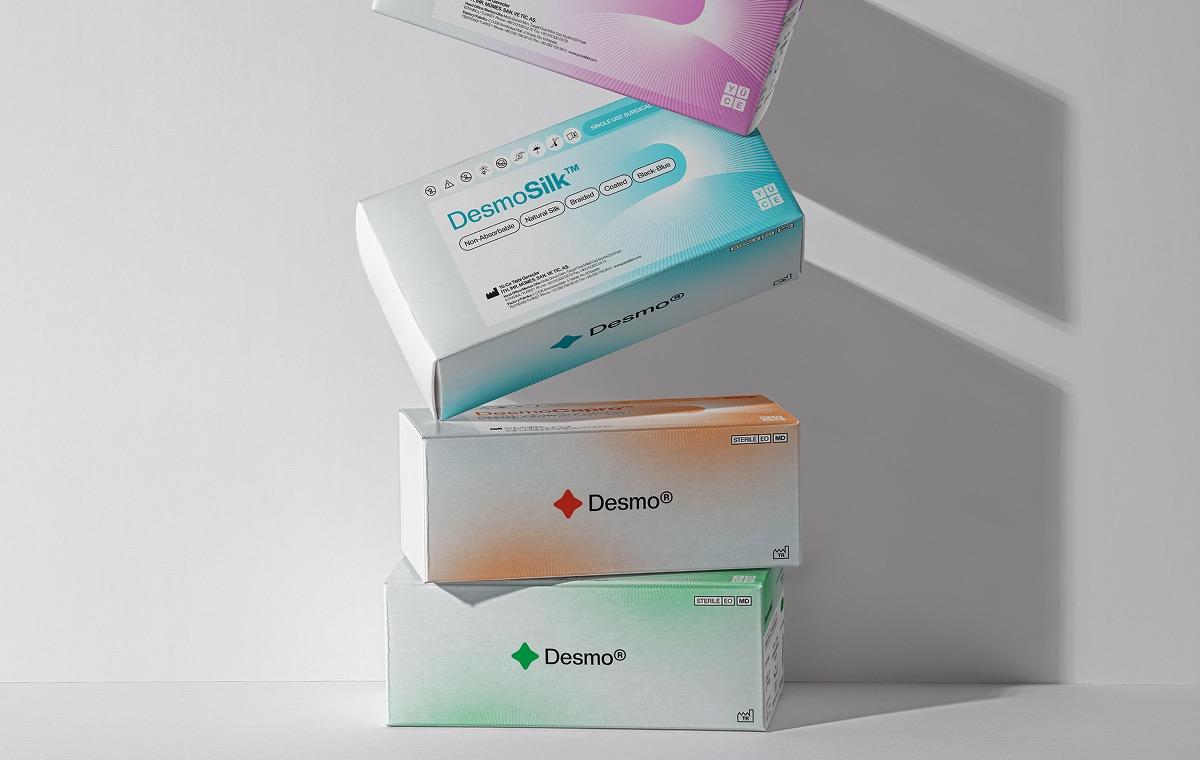
Desmo Care's Absorbable Suture Range
Desmo Care offers a full spectrum of absorbable sutures covering every absorption profile — from rapid-absorbing options for superficial closures to extended-absorption polydioxanone for high-tension fascial repair. Each product is engineered for predictable, consistent absorption behavior lot after lot.