Knotless Suturing: Benefits, Techniques, and Best Practices
Knotless suturing techniques reduce operative time, minimize tissue reaction at knot sites, and distribute wound tension more evenly. This guide covers the key methods, clinical advantages, and practical tips for adopting knotless closure.
Why Go Knotless?
Surgical knots are a necessary component of traditional wound closure, but they are also a source of complications. Knots create localized stress concentrations, act as nidi for bacterial colonization, and contribute to foreign-body tissue reaction. Knotless suturing eliminates these issues by using self-anchoring mechanisms — barbs, clips, or welded loops — to secure the suture without tying.
What Are the Clinical Benefits?
- Reduced operative time — eliminating knot tying saves 2–5 minutes per closure layer, a meaningful gain in multi-layer or laparoscopic procedures.
- Uniform tension distribution — without bulky knots, tension spreads evenly along the suture line, reducing the risk of tissue ischemia and dehiscence.
- Lower tissue reaction — knot mass is the primary driver of foreign-body response; removing it reduces inflammation and scar formation.
- Easier laparoscopic/robotic use — intracorporeal knot tying is one of the most technically challenging steps in MIS; knotless systems simplify it dramatically.
Key Knotless Techniques
Several approaches exist, each suited to different clinical scenarios:
- Barbed sutures — unidirectional or bidirectional barbs anchor into tissue; the most widely adopted knotless method.
- Loop-anchor systems — a pre-formed loop at the suture tail locks the first pass without a knot.
- Clip-based fixation — small titanium or absorbable clips secure suture ends; used primarily in tendon and ligament repair.
"Knotless closure is not a compromise — in many applications, it outperforms knotted techniques in both speed and wound quality." — Journal of Minimally Invasive Surgery, 2025
Best Practices for Adoption
Surgeons transitioning to knotless techniques should begin with straightforward continuous closures (e.g., subcuticular skin, uterine) before progressing to more complex fascial or tendon repairs. Proper tissue-bite spacing (3–5 mm) and consistent tension are critical to avoiding gaps or puckering.
Desmo Care's Knotless Solutions
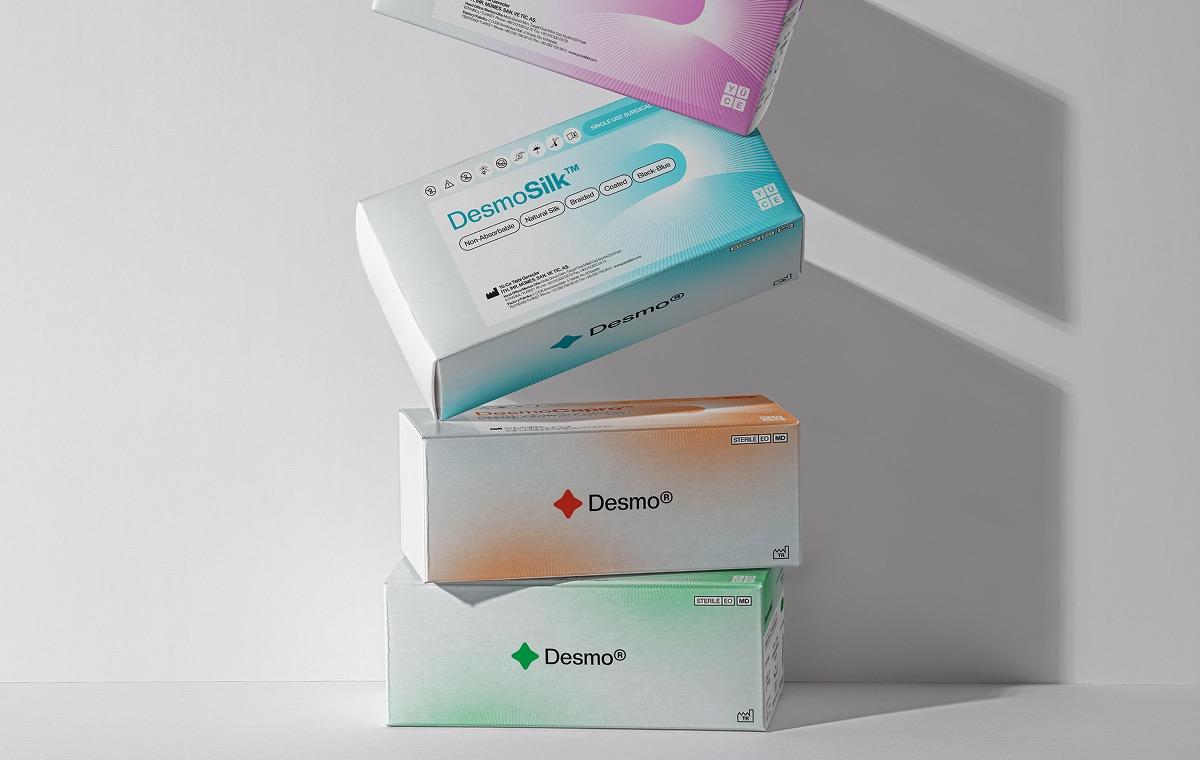
Desmo Care is expanding its product range to include knotless-compatible configurations designed for intuitive handling and reliable anchoring. Our sutures are engineered to give surgeons confidence in every knotless closure.