Wound Healing Phases and How They Guide Suture Selection
Understanding the four phases of wound healing — hemostasis, inflammation, proliferation, and remodeling — is essential for choosing the right suture. This guide maps each healing phase to optimal suture material, size, and absorption profile.
Why Wound Healing Science Matters for Suture Choice
Every surgical wound progresses through four overlapping phases: hemostasis, inflammation, proliferation, and remodeling. Each phase places different mechanical and biological demands on the closure material. Selecting a suture that aligns with these demands can reduce dehiscence rates by up to 40% and significantly improve cosmetic outcomes.
Phase 1: Hemostasis (Minutes to Hours)
Immediately after incision, the body activates its clotting cascade. During this phase, sutures must provide secure initial wound approximation without excessive tissue compression. Braided sutures such as polyglycolic acid offer excellent knot security, which is critical during the first hours when mechanical forces are highest.
Phase 2: Inflammation (Days 1–5)
The inflammatory response brings immune cells to the wound site. Suture materials that provoke minimal tissue reaction — such as monofilament synthetics — reduce prolonged inflammation. Studies show that monofilament sutures like polydioxanone (PDO) produce 30–50% less inflammatory infiltrate compared to natural braided materials like silk.
Phase 3: Proliferation (Days 5–21)
Fibroblasts deposit collagen and new tissue forms across the wound. The suture must maintain tensile strength throughout this period. Absorbable sutures with medium-term profiles (60–90 days of strength retention) are ideal for tissues that heal at a moderate pace, such as fascia and peritoneum.
Phase 4: Remodeling (Day 21 – 1 Year+)
Collagen reorganizes and the wound reaches its final strength — typically 70–80% of original tissue by 12 weeks. For slow-healing tissues (tendons, aponeuroses), long-acting absorbable or non-absorbable sutures are preferred to provide mechanical support during this extended phase.
Practical Selection Guide
- Fast-healing tissues (mucosa, subcutaneous): Rapid-absorbing sutures — polyglactin 910 rapid or plain catgut
- Moderate-healing tissues (fascia, muscle): Medium-absorbing sutures — polyglactin 910, polyglycolic acid
- Slow-healing tissues (tendon, linea alba): Long-absorbing or non-absorbable — polydioxanone, nylon, polypropylene
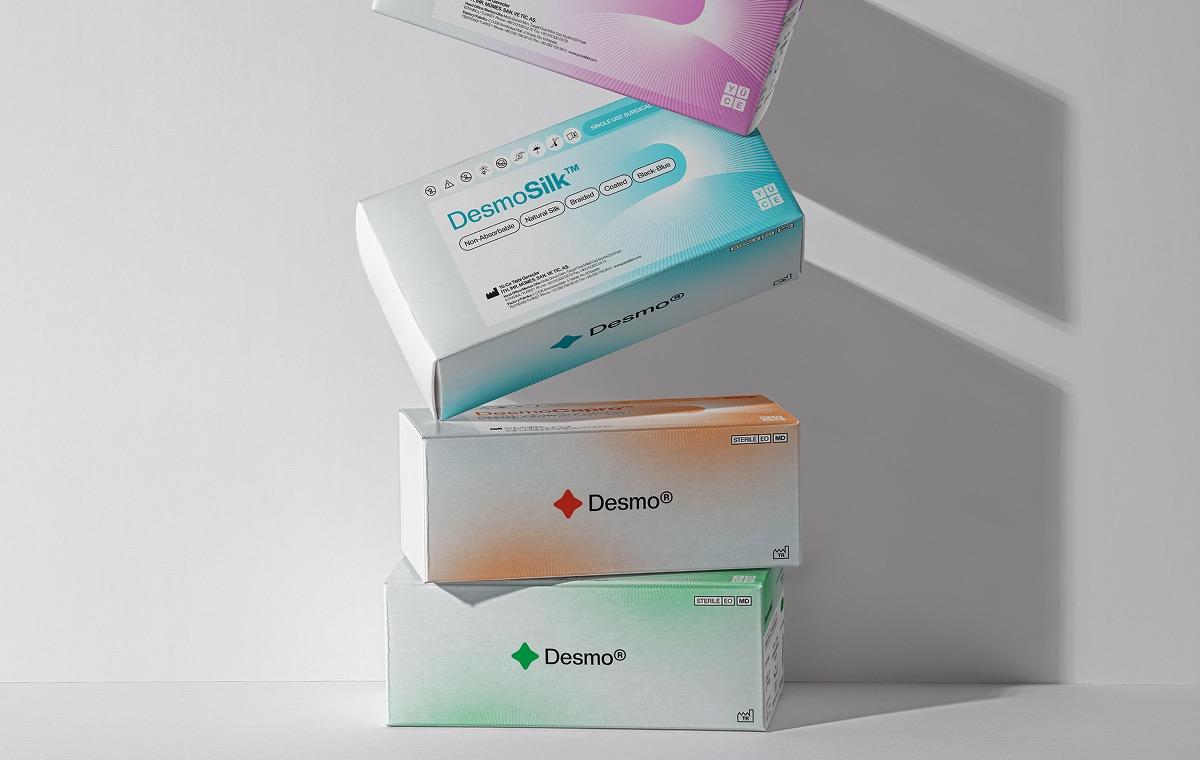
At Desmo Care, our absorbable and non-absorbable suture portfolios are engineered to match each healing phase, with predictable tensile strength retention curves validated through ISO 13485-certified testing protocols.
Key Takeaway
Matching suture properties to wound healing biology is not optional — it is evidence-based practice that directly impacts patient outcomes. Surgeons who consider absorption timing, tensile strength profiles, and tissue reactivity when selecting sutures achieve consistently better results.